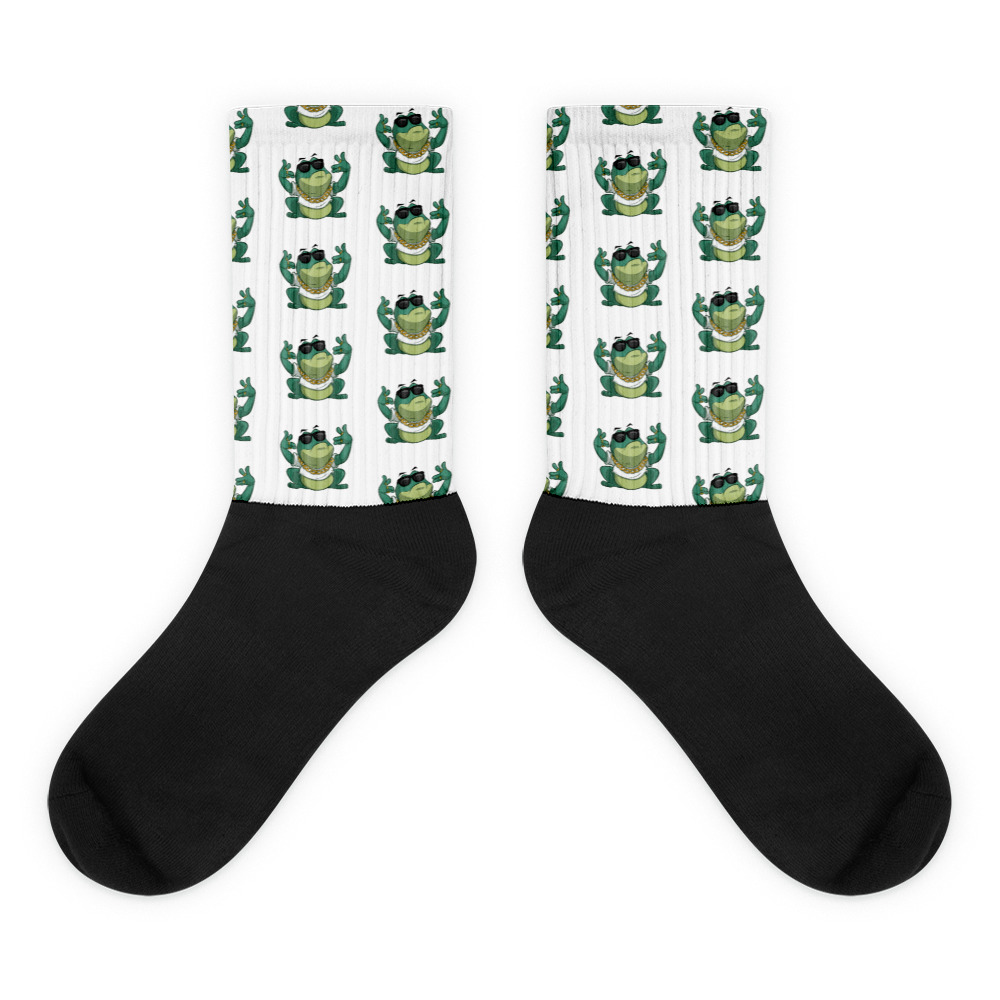
Custom printed socks used to be a novelty. You saw them at trade shows, on gag gift racks, and stuffed in stockings around the holidays. Somewhere in the last five years the whole category grew up. Socks are now a real fashion piece, a small canvas that people use to signal taste, humor, or a bit of personality that a plain outfit does not have room for. Almost every pair of custom print socks with a real design on it was made with sublimation printing, and knowing what that process can and cannot do makes a big difference in what you get for your money.
What Sublimation Printing Actually Is
Sublimation is a printing process where solid dye turns into a gas under heat, bonds with the fibers of a fabric, and then returns to a solid inside the material itself. The design does not sit on top of the sock. It becomes part of the fibers. That is why you can run your hand across a sublimated sock and feel nothing on the surface. The color is inside the yarn.
The process starts with a design printed onto special transfer paper using dye-based ink. The paper gets pressed against the sock in a heat press at high temperature. The ink turns to gas, moves into the polyester fibers, and locks in when the fabric cools. What comes out is a sock with color that runs through the material rather than a print stuck to the outside.
Why This Method Won the Sock Market
Sublimation took over custom print socks for a few practical reasons. The color range is huge. The detail is sharp. The design does not crack, peel, or flake with wear, and once the sock is made, it can go through the washer hundreds of times without the graphic fading in the way a printed cotton tee would.
For anyone selling small runs of custom designs, sublimation is also the fastest method to produce. There is no ink screen to build, no vinyl to cut, and no long dry time. A custom pair can go from art file to finished sock in under an hour when the shop is set up right.
What Sublimation Can Do
Full Coverage from Toe to Cuff
A sublimated sock can be printed across the entire surface. There is no seam where the color stops. Designs can wrap around the ankle, cover the heel, and continue up the leg without breaking. This is something no other print method can do at the same price point.
Photographic Detail & Full Color Range
Because the ink is dye-based, sublimation can reproduce photographs, gradients, and detailed illustrations without losing sharpness. A design with hundreds of colors costs the same as a design with two. The printer does not care about the count.
Prints That Do Not Crack or Peel
The color is inside the fibers, not on top. That means there is no layer of ink that can flex, split, or lift off. A sublimated sock keeps its graphic for the life of the fabric itself, and the print usually outlasts the yarn.
What Sublimation Cannot Do
The process has real limits, and knowing them saves you from buying socks that will not hold up.
It Only Works on Polyester
Sublimation dyes bond with polyester and other synthetic fibers. They do not bond with cotton at all. Most custom print socks are made from a fabric mix that is heavy on polyester, usually eighty percent or more, with a small amount of cotton, nylon, or spandex mixed in for stretch and comfort.
That polyester requirement changes the feel of the sock. Full polyester socks can run warmer, slicker, and less absorbent than a cotton pair. Buying a custom pair without checking the fiber content is the biggest mistake first-time buyers make.
White Ink Is a Problem
Sublimation cannot print white. The process works by adding color, and white is the absence of added color. On a white sock, anything you want to appear white gets left blank, which works fine. On a colored sock, white designs simply cannot be reproduced through sublimation alone. That is why most custom print socks start with a white or very light base.
Colors Look Different on Dark Fabric
Sublimation ink is transparent. The color you print sits inside the fiber and mixes with whatever color the fiber already has. Print red on a white sock and you get bright red. Print the same red on a grey sock and you get something darker and duller. This is why most sublimation shops require you to submit designs made for a white base.
Fabric Matters Even With a Good Print
Even a well-printed sock will fall apart if the fabric underneath is cheap. Look for socks made with combed polyester and reinforced heels and toes. A tighter knit holds ink better and springs back after washing, while a loose knit distorts the design over time.
Cuff quality is another tell. A ribbed cuff that keeps its snap through fifty washes is a sign the sock was made with care. A cuff that slouches after five wears is a sign the yarn was chosen for cost.
Design Tips for Custom Print Socks
Keep detail away from the toe seam and the arch, since those areas stretch the most when the sock is worn. Test the design on a mockup that shows the sock inflated on a foot, not laid flat. A pattern that looks great flat can distort badly once it stretches around the calf and ankle. Bold graphics tend to hold up better than fine lines, especially in high-stretch zones. Bright colors also sell best, since muted designs get lost inside the shoe.
Care So the Print Lasts
Wash your custom print socks inside out on a cold cycle. Skip the fabric softener, which can coat the fibers and dull the color over time. Air dry when you can, or use low heat if you have to run the dryer.
Done right, a custom pair of sublimated socks holds its graphic for years. That is the promise of the process, and it is why sublimation became the standard for the whole category.