If you had told anyone in 2015 that frogs would become one of the biggest visual motifs in streetwear a decade later, you would have gotten a strange look. Frogs were for kids’ cartoons and swamp postcards. Now the frog aesthetic apparel category is a real thing, and you can walk into any streetwear-heavy area and spot at least three people wearing something with a frog on it. The rise has been quiet, weird, and stubborn. Once you look at how it happened, the whole thing makes more sense than it seems.
Why the Frog Even Works
The frog is a strange choice for a fashion symbol on paper. It is small, wet, and lives in ponds. But that is exactly why it works. Streetwear pulls its power from the unexpected. Wolves, eagles, sharks, and tigers are the traditional apparel animals because they are supposed to signal strength or aggression. A frog signals none of those things. It signals a different kind of energy that is playful, a little weird, and slightly off. That gap is what makes the frog work.
There is also a functional design reason. The frog silhouette is instantly readable. The whole animal breaks down into a round body, wide eyes, and two front legs, and you can strip a frog down to five elements and everyone still knows what it is. That kind of visual simplicity is a gift for graphic designers who need a motif that reads from across the room.
The Cross-Cultural Story
Frogs show up in almost every culture on earth, and they mean something in almost all of them. In Japan, they signal luck and safe returns from a trip. In parts of Africa, they signal rain and fertility. In Central America, tree frogs show up as gods and spirits in old carvings. That cross-cultural weight gives the frog motif a depth that a random animal choice would not have. When a brand puts a frog on a tee, it is pulling from a well that goes back thousands of years, even if the brand does not realize it.
The Pop Culture Ladder
Frog aesthetic apparel did not appear out of nowhere. It climbed a ladder of pop culture moments over decades.
The Cartoon Era
Kermit the Frog started the whole thing. From the late 1970s through the 1990s, Kermit was the friendly face of the frog world. He was clever, calm, and quietly cool. He proved that a frog could be a lead character without needing to be aggressive or intimidating. Michigan J. Frog and the animated frogs of Saturday morning cartoons kept the motif alive in the background.
The Video Game Era
Frogger, released in 1981, put a frog into arcades everywhere. The game was simple, addictive, and made the frog into a symbol of persistence under pressure. That association carried into later game design, where frog characters kept showing up as small, quick, and hard to catch. Video game nostalgia is a big driver of streetwear graphics, and Frogger sits right in that pool.
The Internet Era
The internet did the heaviest work. Pepe the Frog, Dat Boi, and dozens of other frog memes turned the animal into a shared visual language for a generation. Some of those memes got hijacked by groups the original creators wanted nothing to do with, which caused a wave of pushback and reinvention. Independent artists started making their own frog art on their own terms, and much of the current frog aesthetic apparel scene grew out of that reclaim.
What Frog Aesthetic Apparel Looks Like Now
The current wave is not one style. It is a whole spread of interpretations.
Cute & Cartoon
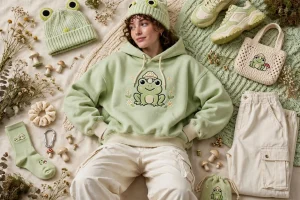
Some of the most popular frog pieces lean into the cute end. You see big eyes, soft colors, round forms, and tees that look like they could be sold at a summer camp gift shop. This end of the spectrum overlaps with cottage-core and the wider softness trend that has taken over youth fashion in the last few years.
Weird & Illustrative
Another end goes hard into the strange. You get detailed line drawings of frogs in unusual poses, frogs with human features, and frogs in surreal environments. This end lives closer to underground zine culture and small-run print shops, and the pieces feel more like wearable art than apparel.
Bold & Graphic
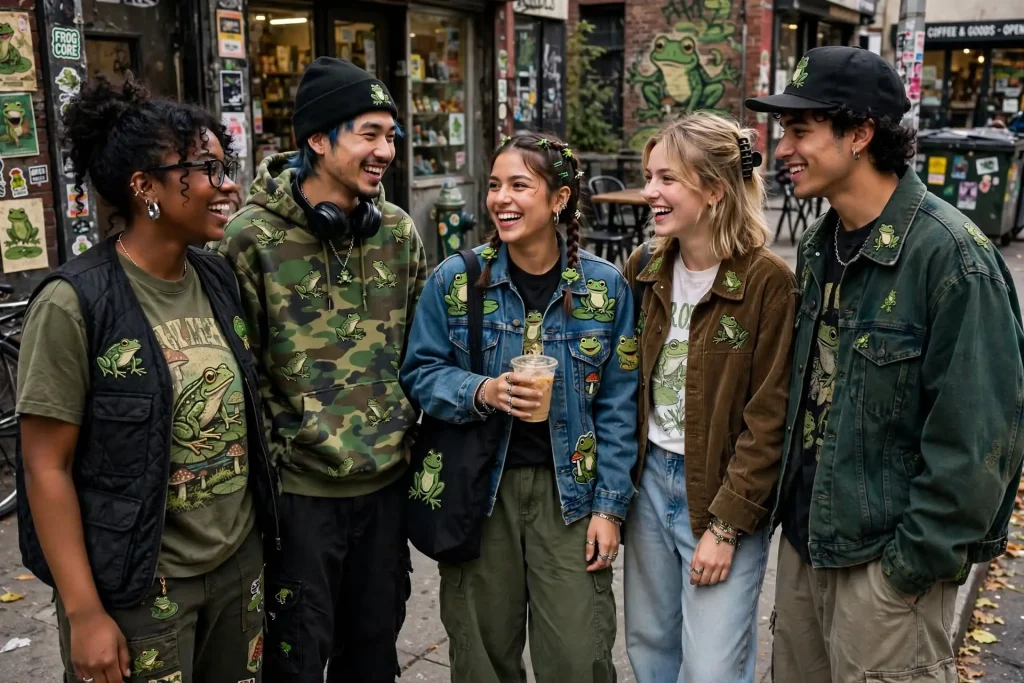
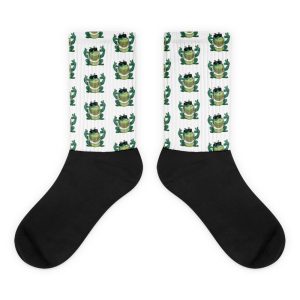
The middle is where most of the frog aesthetic apparel sits. You get big, bold frog graphics printed loud on tees and hoodies, high-contrast colors, and simple forms that read from across a room. This is the version most people will encounter first, and it is the version that has crossed over into mainstream streetwear.
How to Actually Wear It
A frog graphic can go a few different ways depending on what else you have on.
For an everyday look, a bold frog tee under a plain open shirt with cargo pants and low sneakers keeps the graphic as the focal point without turning the fit into a costume. If the frog on your tee is loud, everything else should be quiet.
For a more layered look, a frog sweatshirt with faded jeans and a light jacket works in cooler weather. The frog reads as a personality piece, not the whole outfit.
Avoid stacking frog pieces. A frog tee with a frog hat and a frog patch on the jacket crosses over from personality into theme park mascot territory fast. One frog per outfit is plenty.
Is It Here to Stay
Some trends come and go in a season. The frog aesthetic has stuck around longer than most because it is tied to something bigger than fashion. It is tied to a broader shift toward personality-driven clothing, the pushback against clean minimalism, and a return to strange, personal graphics that say something specific.
The frog is not going anywhere soon. If anything, the motif is still finding new ends of the pool to expand into. Frog aesthetic apparel started as a niche and quietly became a whole category, and that kind of steady growth tends to last much longer than a viral moment.